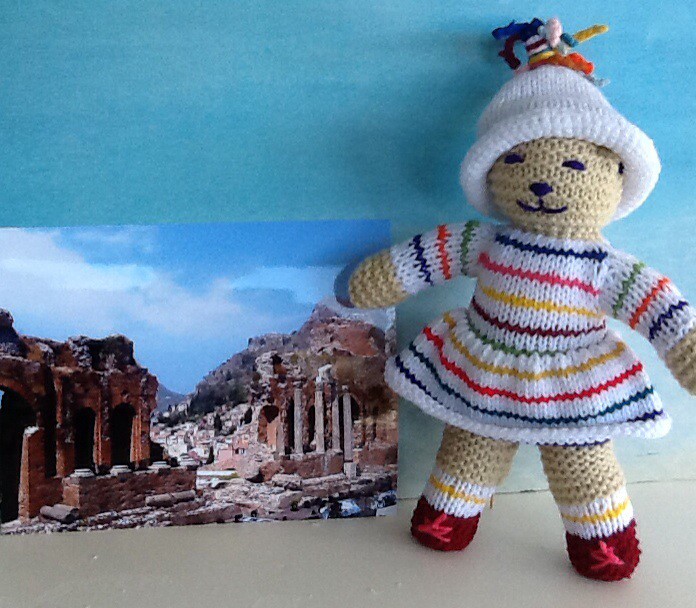
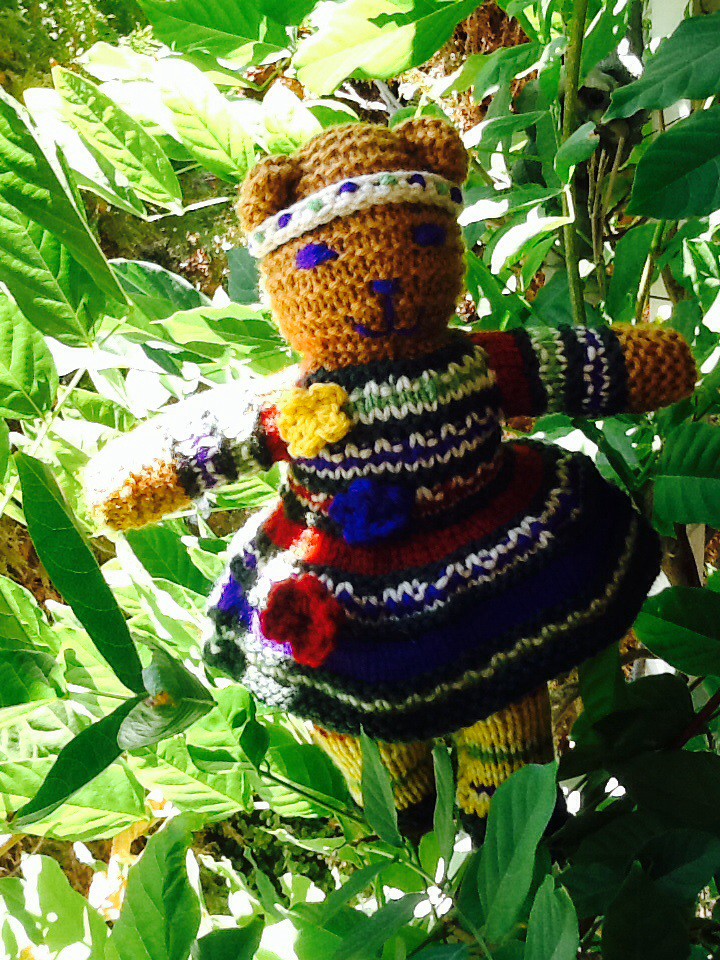
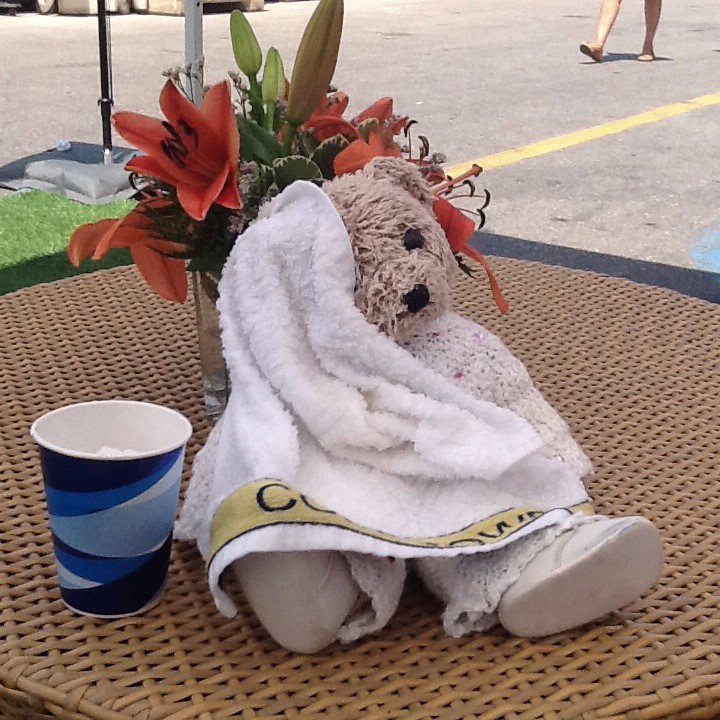
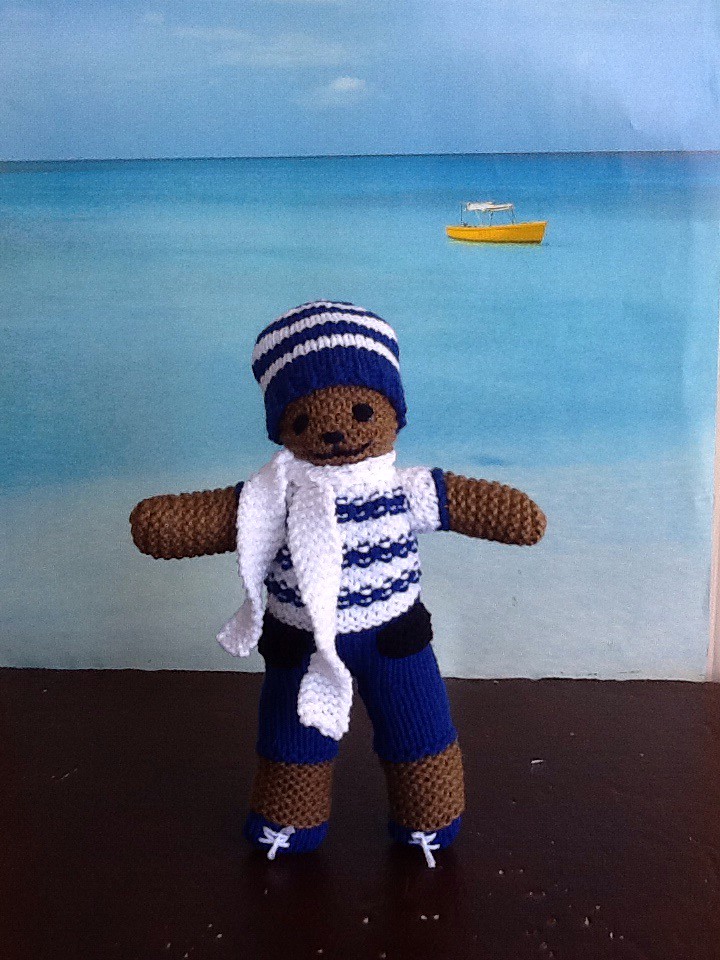
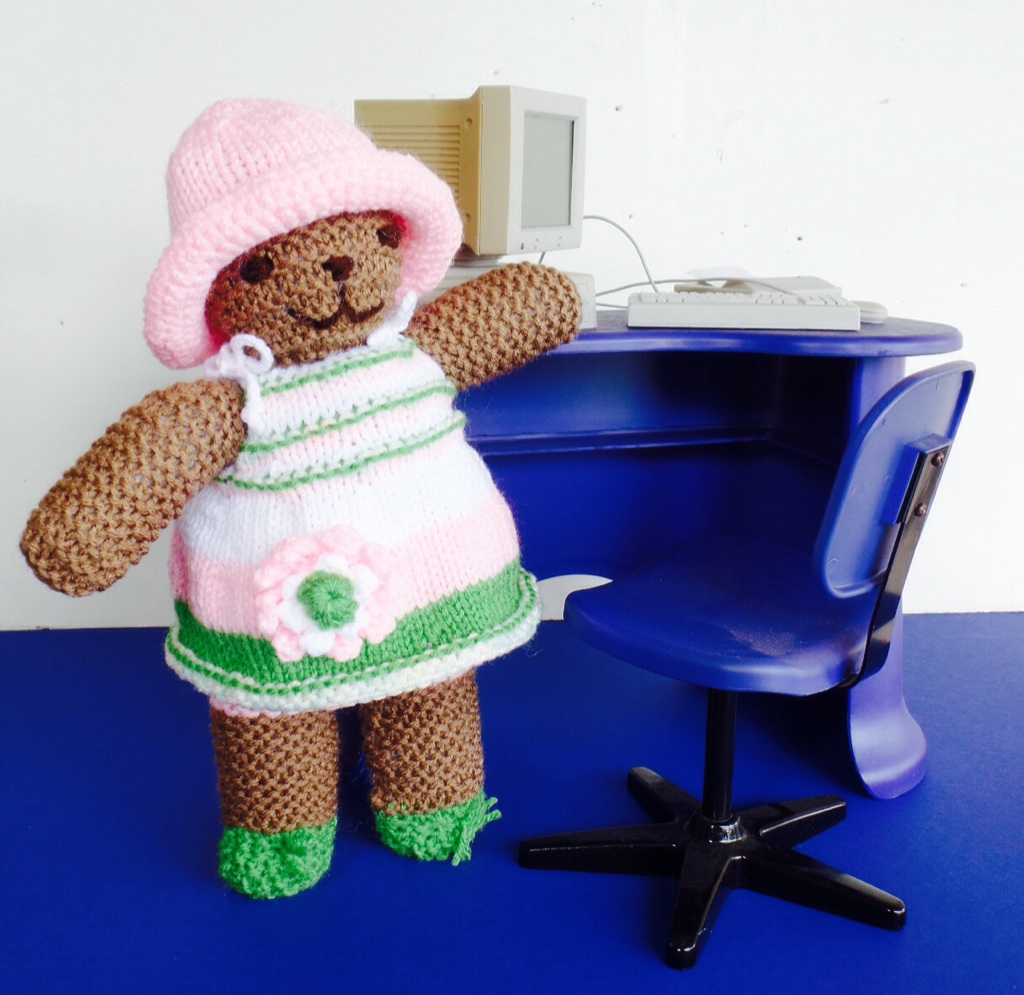
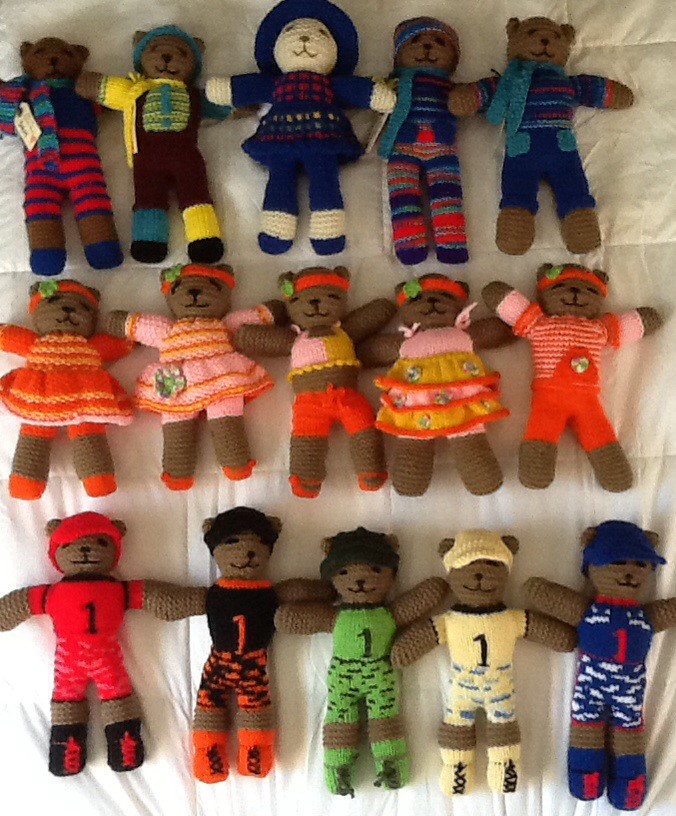
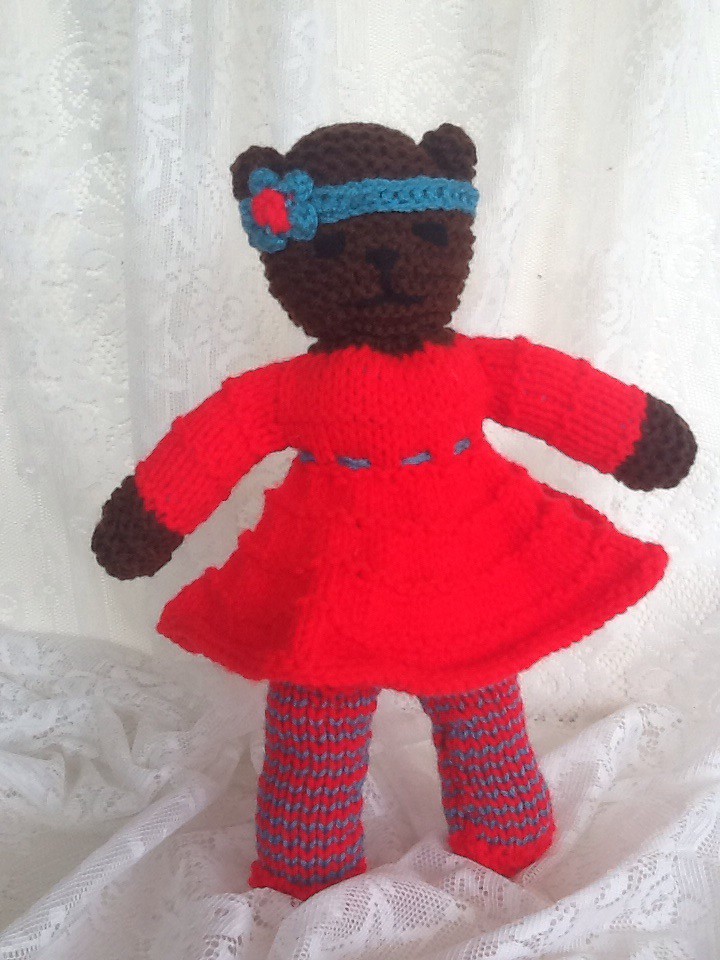
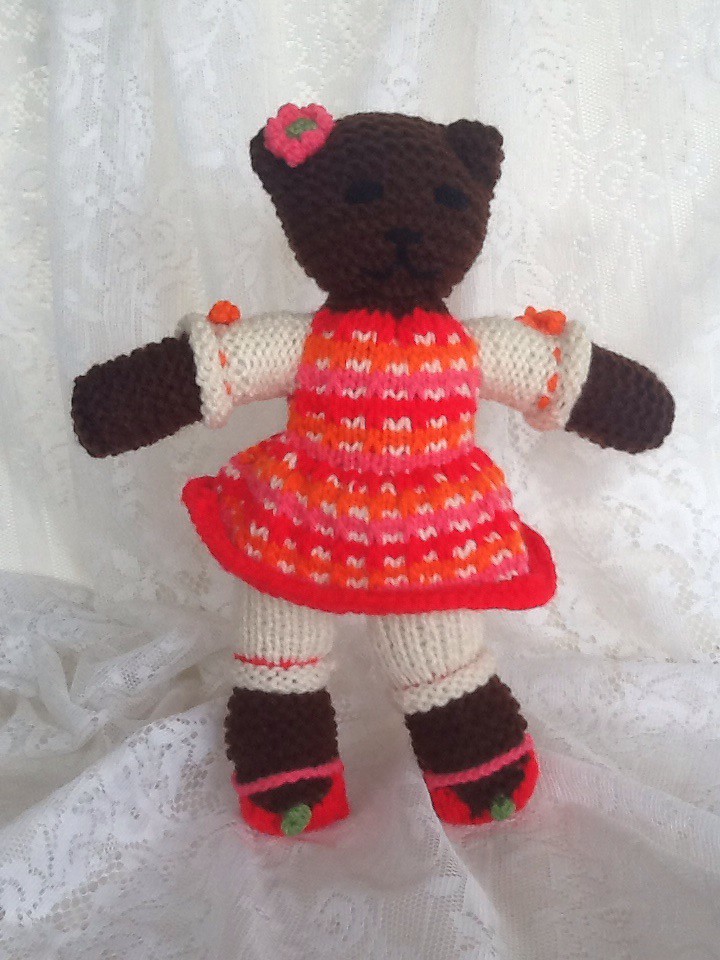
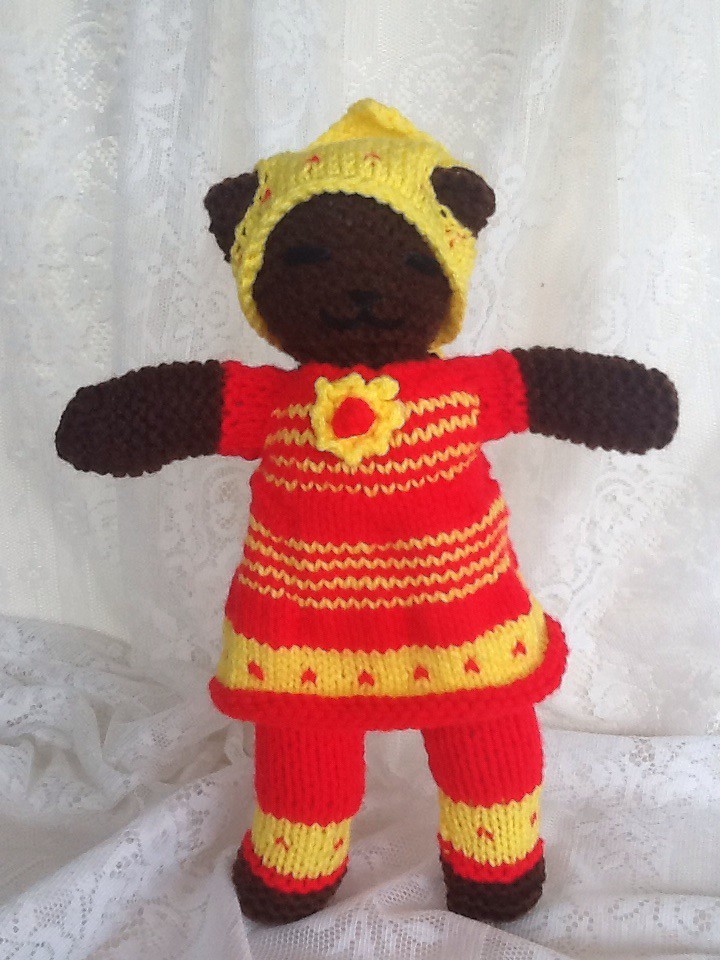
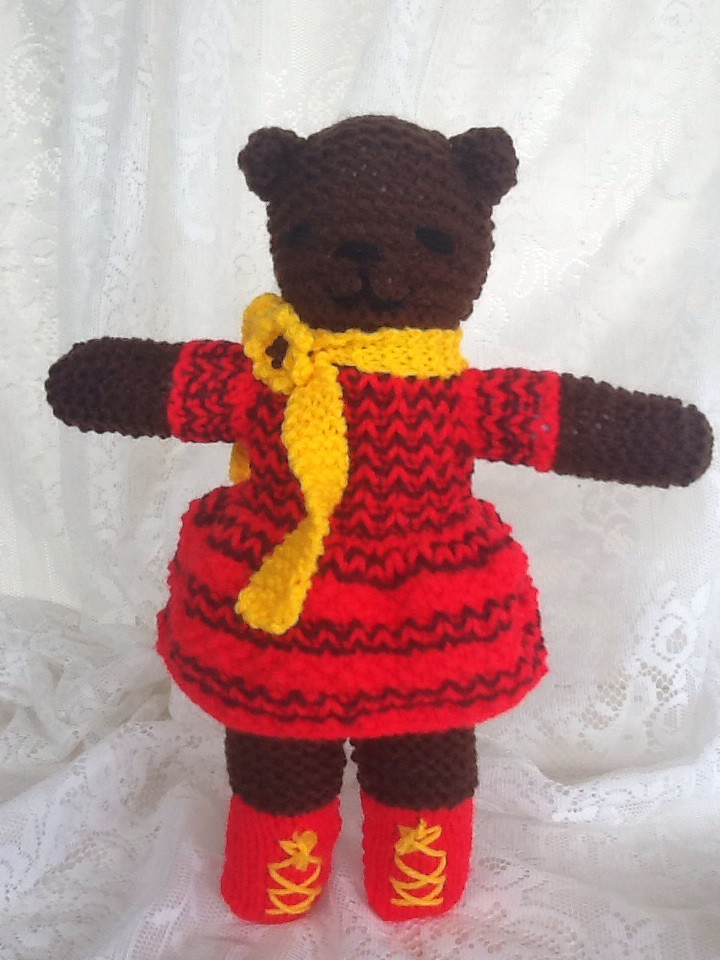
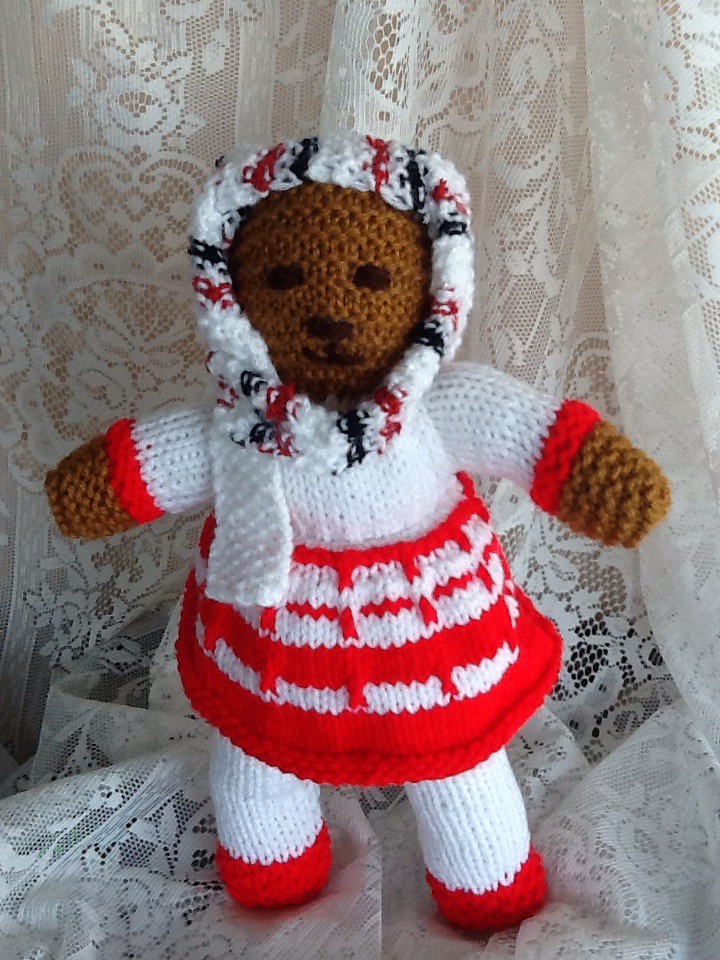
Bear #388 named Sophia
July 18, 2015
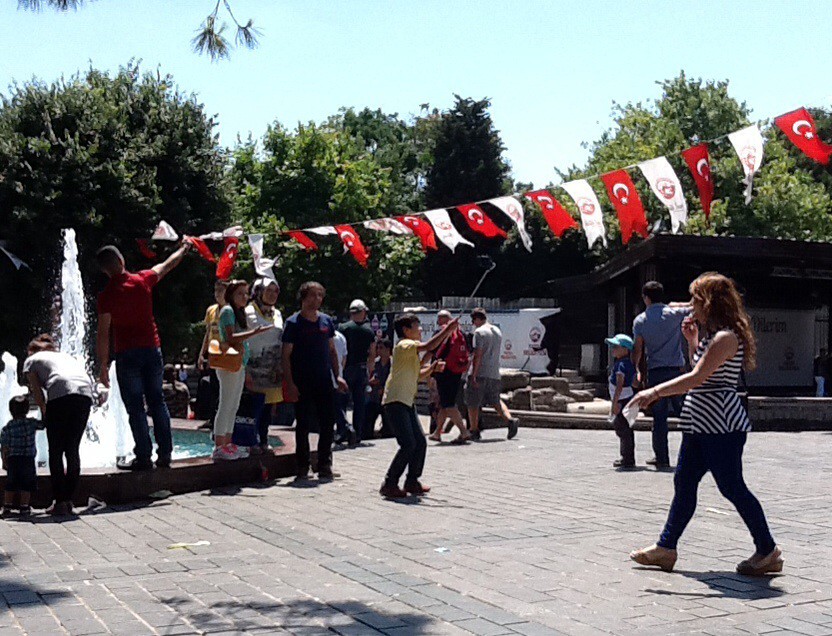
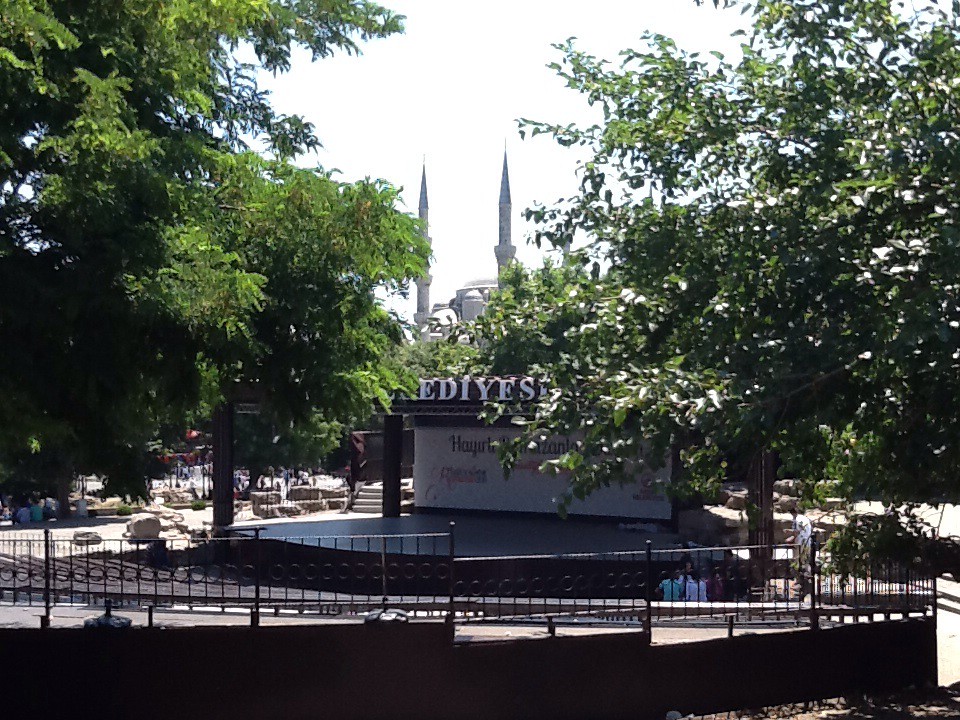
The soul of Istanbul lives in a small square , off Divanyolu Caddesi, near the Blue Mosque and Hagia Sophia. I see it, fluttering in the wind, hovering between tiny red and white flags.
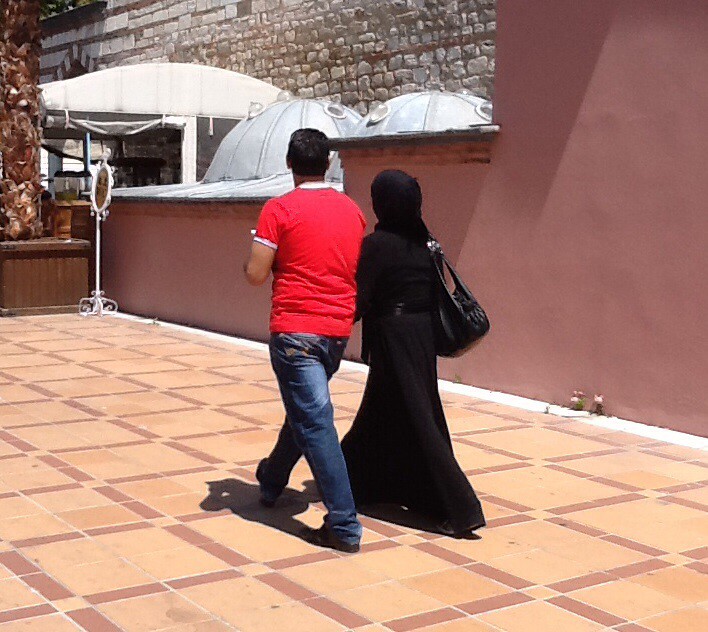
Behind me old men kneel on their carpets, praying. In front a young man in jeans holds his very long selfie stick high up into the air, including a group of friends and the waterfall as background to his enthusiastic, celebrant face. Young women in black from head to toe chat and smile at the baby girl in her stroller. A kiosk operator lines up rows of roasted corn. Giggling preteens in summer dresses, flower wreaths on their heads, dip their feet in the fountain. I see hot pink sneakers, bare feet in sandals, black high heels, loafers, and plain white tennis shoes walk by. Heads are covered in shiny turquoise or black or flowery head scarves. Cell phones are pressed against ears by big bosomed mothers and tiny grandmothers. A t-shirts with the slogan "Today will be great" dances on a skinny teen's chest. A pregnant tummy is graced with "C'est bon."
Families, friends, singles, old and young, locals and visitors, all mingle in the festive atmosphere of Eid al-Fitr, Feast of Breaking Fast, the three day festival called "Ramazan Bayrami"
I think this must be Istanbul at its very best.
Classical Istanbul by Cane. July 19, 2015
It was Sunday, the last day of the Ramadan festival that had closed the Grand Bazaar and had brought what seemed to be most of Turkey's families to the mosques in Istanbul.
I had had a great night. Deep relaxation. No leg cramps. No nightmares. Through the wide open glass door to my balcony, cabin 6224, I had watched crowded ferry boats head toward the Asian side of Istanbul, and had listened to singing party goers in yachts enjoying their travels through the Golden Horn. Old Istanbul, across the Bosphorus, was bathed in a glitter of lights while my home for the next seven days, the Celebrity Equinox, like a dark giant, sat silently in the pier at the edge of the New City.
When I woke at five in the morning I felt refreshed. I knew a breakfast buffet would soon be waiting for me on deck 14, and by ten to six I was packed for the Classic Tour of Istanbul and ready for croissants, fruit, and coffee. After my early breakfast I bought two huge bottles of water, one to take on the tour and one to keep in my cabin where I watched the morning news until it was time to assemble in the theatre.
There were thirty six of us; we each were given a pink sticker with the number 13 - the number also displayed on our bus - to wear for the day. Instructions followed on how to get to the bus outside the security area. After crossing the Galata bridge we drove along Kennedy Drive into the center of Old Town. The beautifully serene area between blue Mosque and Hagia Sophia that I had witnessed the day before had changed into a bus depot, surrounded by a throng of visitors who rapidly moved from station to station, listened to the words of their guides through ear phones, backing up to take pictures of the famous places we were all here to see.
A long line snaked around the Blue Mosque. Men in shorts received a wrap around, light blue, skirt type garment to conceal their legs; women without head and shoulder covering had to put on light blue head scarves and dark red long robes. Those of us who had brought our own long sleeved tops and scarves quickly pulled them from our bags and readied ourselves. I barely recognized a man I had met earlier on board the ship; he had promised to "look out for me" when I had voiced my concerns with the tour that was advertised as "strenuous." His wife struggled with her robe; he kept trying to pull down the front while I tugged on her backside until she all but disappeared in the unwieldy garment. Eventually her arms reappeared and she began to turn her camera toward the Muslim men who were washing up in preparation for entering holy ground. Meanwhile Hava, our tour guide, explained the ritual and its origin in detail.
Minutes later I faced my second challenge of the day, climbing the steps of the mosque. I had already passed my first test, entering and leaving the bus, by holding on to rails while always placing the tip of my cane one step ahead of me. There were no rails for the mosque entrance and the steps were steep.
"I can do this!"
By the time I had conquered the twelve stairs, one step at a time, I was drenched in sweat. Inside I saw the woman in a wheelchair who had been seated in the first row on the bus. Her son and husband took turns pushing her from place to place and had been routed through a different entrance.. We started talking. She offered to hold on to my backpack. Her son, throughout the day, would hold me by the elbow when he saw that I struggled with a staircase.
I probably should have paid more attention to the guide's words about the history of the Blue Mosque. Instead I watched the rather modern obsession with selfie sticks. Many, many cell phones shot into the air to capture one, two, three, even more people in a group, showing as background the interior of the Mosque. When, I wondered, has it become background?
And why is it important that the taker of the photograph be part of the scene? Does social media dictate that an adventure is only real if you can prove your presence with a toothy smile or a pouty mouth? Is it narcissistic to take selfies, I wondered. And why do the shooters so often move backwards without regard to the traffic behind them? I know, they are probably zooming in on the background, the blue tiles, the iconic design, the ancient beauty, while adjusting their own facial expressions.
Anyway, through the pearls of sweat dripping from my eyebrows, I eventually did try to concentrate on the mosque and its history. But my red-hued silky scarf did not breathe, and my capacity to focus on cultural and religious traditions behind separation of men and women during prayer was diminished by the combined force of male and female tourists crowding each other and me on limited floor space. By the time Hava encouraged our exit the significance that I now have seen the Blue Mosque and can claim it as one of my adventures was enough to let out a sigh of relief. I knew that I would have benefitted more from silent observation, from standing in a corner, by myself, reflecting on the purpose of this religious gathering place, but I can go home, google the details I missed, and nod my head when I see a scrap of information that I remember.
"Yes! That's true. I saw that!"
Didn't Hava mention the design of the carpet, the way it allows feet and knees and head of each man to align with the one in front and beside him? Fairly close positioning. That's why feet need to be washed before entering the mosque.
I watched a young man in our group get down on his knees to fit his tall body into the predetermined position. He carried his sandals in the bag that Hava's agency provided for us. He was barefoot and the soles of his feet certainly did not pass the cleanliness test. I smiled; some religious rules do not apply to tourists.
As we passed the exit door I ripped the scarf from my head, wiped my forehead, unzipped my sweatshirt and stuffed it into my bag. Then, facing the steep stairs, I felt a wave of dizziness; I quickly looked away. Going up a flight of stairs might be a difficult task for me now, because osteoarthritis limits the flexibility of my legs, but it seems to be a predictable limitation. Given the chance to hold on to a device of some sort, the cane, an arm, a wall, a railing, I can pull myself up. My upper body, my arms are strong. And even without support, if I failed, I assume I would stumble forward, eventually hitting the stairs. Not desirable, but not life threatening. Going down a flight of stairs is much more dangerous. Unpredictable.What if an ankle, a knee, a hip joint suddenly refuses to do its job?
Without starting my descent I slowly, cautiously, moved sideways, tried to get closer to the wall on my right. Around me other tourists continued to pass me. When I reached the wall I placed my hand flat against it and step by step I advanced. First the cane then my right foot, then my left foot, then the hand on the wall. A young couple sat close to the wall four steps from the bottom. I would have to let go, maneuver to the left, around them. Just then the woman looked around, gave her companion a nudge, whispered something into his ear. They both stood up. He came toward me and said,
" Let me help you!"
I let go of the wall, hooked my right hand into his left elbow and easily made the last four steps.
" Thank you so much! That was very nice of you!"
As I walked toward Hava and her orange umbrella with the number 13, waiting down the street, I thought that, across cultures, religions, time, and place, a thread of human kindness connects us, still. In spite of the heat, the crowd, the ever present stream of facts coming through the receiver, I felt encouraged, hoisted myself into the bus, looked forward to the next adventure.
After a short ride we arrived at Matis, a carpet factory in close proximity to the Grand Bazaar. The covered part of the bazaar was closed because of the holiday, but, Hava announced, the open part, just around the corner could be visited during half an hour of free time later on.
We were guided to the elevator and arrived for the carpet demonstration in several small groups. I found a vacant spot next to the lady in the wheel chair. By now I knew that she was from Los Angeles and during the next hour I would find out that she had had back surgery a couple of weeks earlier and that she felt more than a hint of guilt toward her husband and son for the inconvenience of the wheelchair.
We all sat on long benches, in a rectangle, along three walls. The fourth wall was the backdrop to rolled up carpets and several young men in suits who would in intervals of a few minutes, carry one of them to the middle of the room and unfold it on the floor. It was the third carpet demonstration in my life. The first one had happened in Marrakesh, the second one in China.
This was also the most interesting demonstration. Or maybe it happened at the right time, allowing me to appreciate the work, the craftsmanship, the quality of materials, and the beauty of each piece. Or .... maybe it was the apple tea that enchanted me. When I took the first sip I knew I had to find some to take home. It was sweet and sour at the same time, strong, yet not overpowering in taste. In short, it was perfect.
So were the carpets. Handmade, often taking six to eight months to produce. There were old, typically Turkish designs and colors and there were modern carpets, inspired by the imagination of young art students. Cotton and wool were hand dyed with colors prepared from herbs, from insects, from natural sources. Several carpets changed color depending on the direction from which you looked at them. Never before had I thought that such a carpet would appeal to me. I still remember the worn out, thread bare "oriental rugs" of my childhood. But, as the manager said, hardwood floors are coming back and with that the desire to place pieces strategically around the home, and I had to admit to myself that I liked what I saw.
Well, I admitted to loving them as art pieces, but knew that I would never be able to afford one, not even at the discounted prices as quoted. Twelve thousand dollars for the beautiful and intricate shades of green? Four or five thousand dollars for the smaller piece, the red one that owed its deep coloring to lady bugs. But thank you for the tea and simit slice - he had called it Turkish bagel - and thank you for making me aware of the intrinsic beauty of handmade carpets. Up to now I had only been saddened and distracted by the knowledge that carpets were created by young Chinese girls who sat on wooden benches during long underpaid work hours and had to quit at age thirty because they could no longer see well enough to achieve perfection. And I had been angered by the relentless efforts of a Marrakesh salesman who tried to force me into buying his merchandise.
Once the demonstration was over, I left, escorted to the elevator by one of the sales associates. Back out on the street I smiled my way through several vendors offering scarves and jewelry. One very serious looking teen boy would not let go. He kept waving a black see through scarf in front of me.
"Forty Euros! Please! Real silk! Please!"
When I declined he told me to set my own price. I shook my head and told him I didn't need a scarf.
"Look! Look!" He held up a trio of square designs in plastic bags. "Only twenty Euros."after I had politely shaken off three or four more vendors the kid reappeared asking me several times "Why not"
I looked away and fled into Star Bucks. I think I have never taken a trip without fleeing into a Star Bucks. They make real coffee, not instant. They are relatively cheap. They have Wifi. They are everywhere. The name sounds like a piece of home.
"Caramel Frappuchino Grande, please!"
"9,50TL"
"Thank you."
Outside I picked a seat away from the street edge, opened my iPad, sipped the familiar cool drink and, for a few moments, watched vendors at their game. I tried to connect to Wifi but had the same problem as before in Istanbul. Everybody wants me to give them my mobile phone number so they can send me a verification code. My mobile phone is only good in the US. I sighed, sipped, watched until my half hour was almost over. On the way back to Matis and the bus the teen vendor reappeared.
He held up the black see-through scarf. "Five Euros. Five Euros."
He couldn't believe that I wouldn't buy it, but by then my mind was made up, no matter the price.
He kept trying to put the scarf in my hand, I hid my hand and averted my face. He looked angry. I pointed to the bus with my cane, " I have to go! Sorry!" Abruptly he turned to a woman passing to his left.
"Forty Euros! Please! Real silk!"
Next stop Topkapi Palace, the must see prime residence of Ottoman Empire sultans for 400 years. But I must admit, I was not really interested in the arms and weapons collection or the clock room, or the portraits of the sultans. Maybe the harem where wives and children and concubines spent their lives might have been something to explore, but it was not included. Much of Topkapi was closed to the public, and very long lines had formed in front of some of the open exhibits.
We had forty minutes on our own; there was plenty of outdoor ground to stroll through. I used half of my free time to shop at the museum store. Stroke of luck - I found the tea glass I had looked for the day before. For the rest of the time I sat under the shade trees on one of the benches that lined our meeting area. Watching Turkish family dynamics was like watching a play in a foreign language - some parts are universal and need no words; other parts are mysterious and make me want to ask questions. Mothers who are covered by long, uncomfortable-looking robes and head scarves are as fast, as observant, and as devoted to their children as are those in short skirts and t-shirts. Fathers, it seems, sit separately, with other men, and are less likely to push a stroller than their western counter parts. But just when I have brought some order into my observations a grandpa will get up and run after a little girl who has strayed from the family gathering. Or a young mother will pick up a crying child and plant her firmly on papa's lap.
When it was time to leave, Hava raised her orange umbrella and we walked to a restaurant not too far from the palace. Lunch in five courses was more than most of us were able to eat. We all were ready to talk up a storm, discussing our impressions of Istanbul. Our plates were loaded with humus and beets and cucumbers and meat filled pies and rice pudding, and, to my surprise, the conversation turned to homeland security and presidential elections, and the absurdity of a man named Donald Trump. It was, by far, the most political debate of my week spent in the company of world travelers on the Celebrity Equinox. The realtor from Washington DC, the couple from Scotland, their daughter who had lived in South Africa for a while, the young girl who sat to my left and smiled a lot, the realtor's wife on my right, an accomplished photographer, we all seemed to bond over an hour long meal at a crowded restaurant high above the Bosphorus.
Our final destination of the day-long tour was Hagia Sophia. It was the place I had most looked forward to. Trying to take a photograph and remembering how I had dropped my camera the day before, in an effort to juggle two straps, that of the camera and that of my cane, I hung the cane on an iron fence. After the shutter clicked I continued toward Hagia Sofia. I forgot the cane.
Naturally I had to backtrack as soon as I realized my mistake. And just as quickly as I hobbled to the entrance, Hava had disappeared. Unfortunately the orange umbrella I eventually found and followed was not Hava's and the next ten minutes had me twist and turn through crowds wondering how to proceed if I couldn't find #13.
But, at the Hagia Sophia Museum I met it again, the soul of Istanbul that I had encountered on my first day. It was like a silent prayer floating through this awe-inspiring architectural and historical wonder, combining cultural and religious traditions harmoniously, transforming ordinary comments by tour leaders and tourists into sacred ritual. Aya Sofia made the heat of the day disappear. It made my worries disappear. I stood in a sea of people to look at Christian iconographic mosaics and Islamic calligraphy high up on the ceiling. I smiled at stone and brick and marble and light. And though the church/mosque/museum had endured earthquakes and wars and fires and pillage and plunder, it felt like the most peaceful place on earth.
While I leaned against my cane, taking turns admiring the ceiling and craning my neck to find my tour guide, I saw that I stood next to the lady in the wheelchair. For an instant I felt that, deep down, it is all connected: the sacred and the profane, the old and the new, stone and human.
The thought that darkness and light live as closely together as the fear of being lost and the safety of being or having found was the perfect ending to the tour. Back on the bus, on the way to the Equinox, I folded up my travel cane and closed my eyes, dreaming of the upcoming, well deserved dinner hour.